Normandy holds a quiet kind of grandeur, where layered history, beautiful architecture, and wide open landscapes sit side by side. From the unforgettable Mont Saint Michel and the Bayeux Tapestry to elegant châteaux, centuries-old churches and abbeys, there is a depth of heritage here that feels both powerful and personal.
Towns such as Rouen, Honfleur, and Deauville are perfect for slow wandering, while long sandy beaches and gentle countryside create space to breathe. The D-Day beaches of Omaha and Arromanches remain deeply moving places to visit, their stories still very present across the region.
For those who enjoy a little adventure, Suisse Normande offers green valleys, rivers, and outdoor pursuits, adding a more active rhythm to an already richly varied and inspiring part of France.

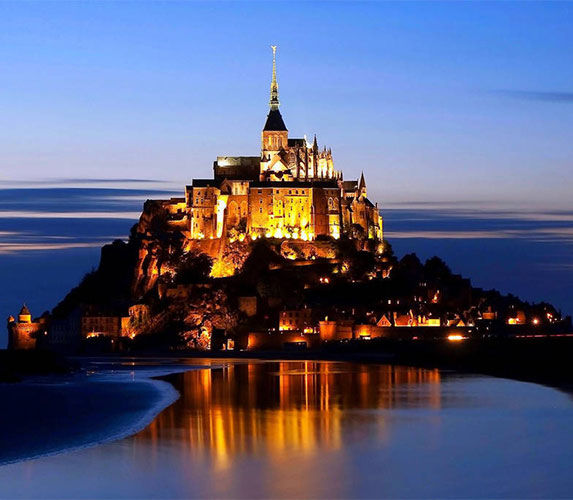
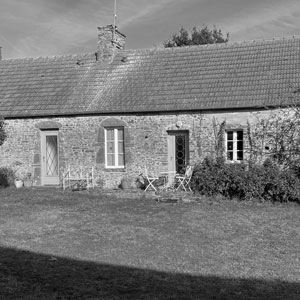
Mont Saint Michel, a UNESCO World Heritage site, is one of France’s most spectacular landmarks and just a short journey from Glatigny Farmhouse. Set on a tidal island, its 12th century abbey rises 100 metres above sea level and has been a sacred pilgrimage site for centuries.
At low tide, you can traditionally walk across the sands, while at high tide, the island is reached by the single causeway road, with panoramic views from the abbey across the bay. If travelling with Brittany Ferries, keep your ticket for a discount on entry.
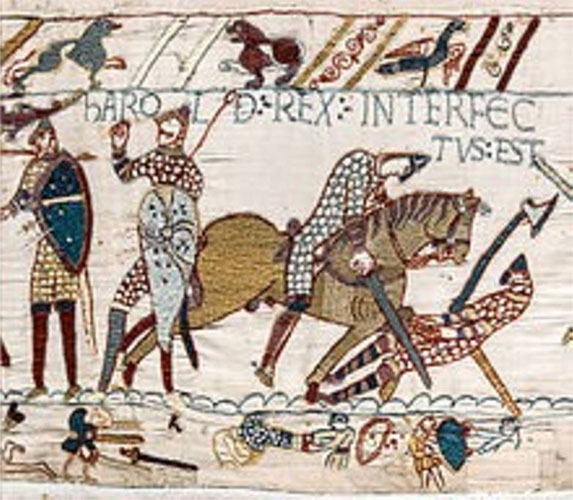
Just a short drive away, the Bayeux Tapestry is remarkable in its own right, yet the historic town of Bayeux is equally worth exploring. Known in French as Tapisserie de la Reine Mathilde, this 70 metre embroidered masterpiece recounts the events leading to William the Conqueror’s victory at the Battle of Hastings in 1066 and is UNESCO recognised for its immense cultural value.
Comprising 58 richly detailed scenes, each with Latin inscriptions, it offers a vivid glimpse into medieval history. Beyond the tapestry, Bayeux enchants with elegant buildings, gardens and the magnificent 11th century Notre Dame Cathedral, one of the finest examples of Norman Gothic architecture.
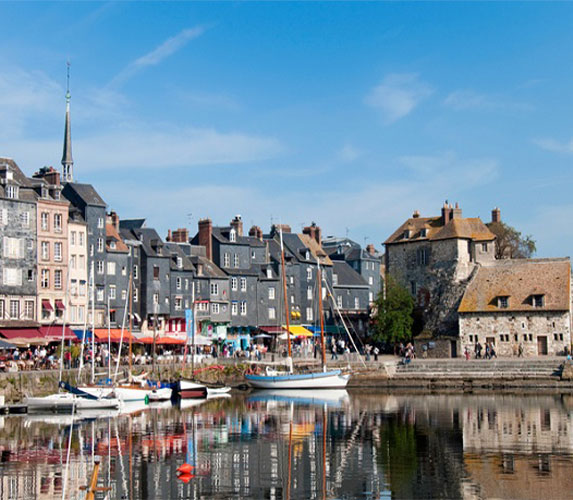
Honfleur is instantly recognisable for its timber framed houses, cobbled streets, and picturesque harbour overlooking the Seine estuary. Dating back to at least 1027, it flourished as a seafaring port in the 16th century, launching voyages to Canada and shaping its rich maritime character.
The 14th century Church of Saint Étienne, now home to the Maritime Museum, is one of its highlights, alongside the main museum in Place Erik Satie and its annex in the belfry of Sainte Catherine’s Church, itself built by local shipwrights after the Hundred Years’ War. Art lovers are drawn to the Musée Eugène Boudin, with over 200 works including pieces by Boudin, Monet, Millet, and Courbet.
Whether visited as a day trip or as a stop en route to or from Glatigny Farmhouse, Honfleur never disappoints.
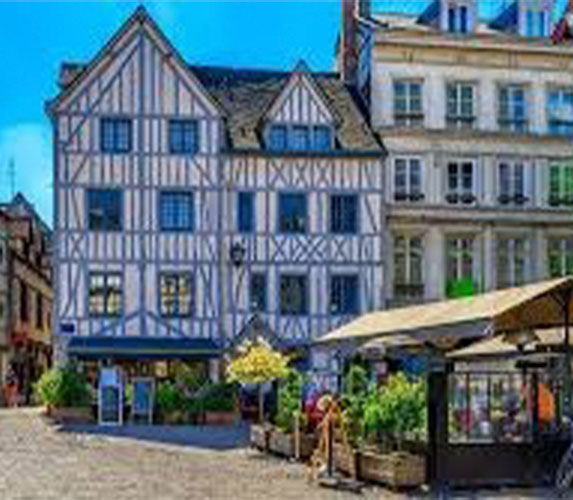
Set along the River Seine and proudly the capital of Normandy, Rouen carries a remarkable weight of history. Founded by a Gaulish tribe and later shaped by the Romans, it grew to become one of the largest and most prosperous cities in Europe, serving as capital of the Anglo Norman dynasties from the 11th to the 15th century. Today, as you wander its cobbled streets lined with timber framed houses and Gothic architecture, that layered past feels almost tangible.
Rouen Cathedral is breathtaking, so much so that Monet painted it repeatedly at different times of day to capture its changing light. The Gros Horloge clock tower is equally striking and impossible to miss. The story of Joan of Arc is deeply rooted here too, as this was the site of her trial, now commemorated in a museum dedicated to her life and legacy. The Beaux Arts Museum holds an outstanding fine art collection, and beyond its culture, Rouen offers excellent shopping and dining, particularly during its celebrated October food festival.
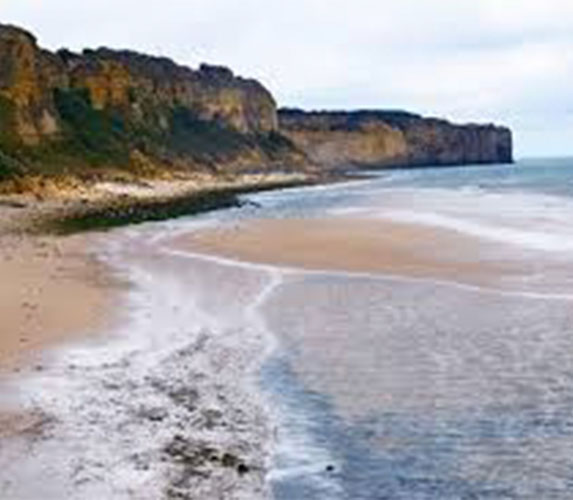
Omaha Beach, stretching from Vierville-sur-Mer to Colleville-sur-Mer, where sheer cliffs rise upto 100 metres, is the most famous of the five D-Day landing beaches. The events of 6 June 1944 unfolded here in one of the bloodiest battles of the war, and visiting today is a powerful and sobering experience.
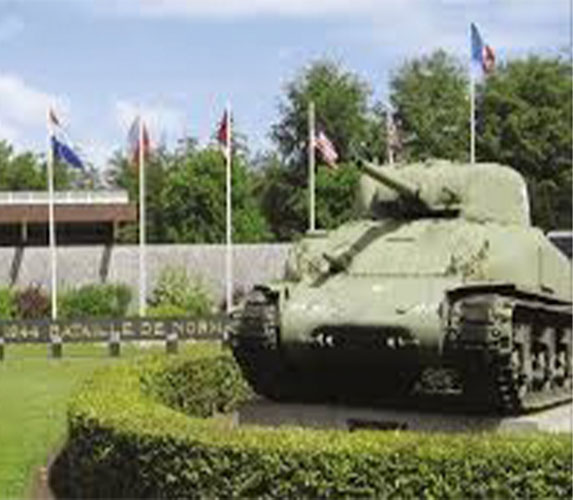
The American Cemetery, with more than 9,000 perfectly aligned graves, leaves a lasting impression, while the nearby Overlord Museum displays tanks, trucks, artillery, and personal belongings of the soldiers who fought here. It is not a light day out, but it is an essential part of understanding Normandy’s story and one we gently encourage guests to experience.
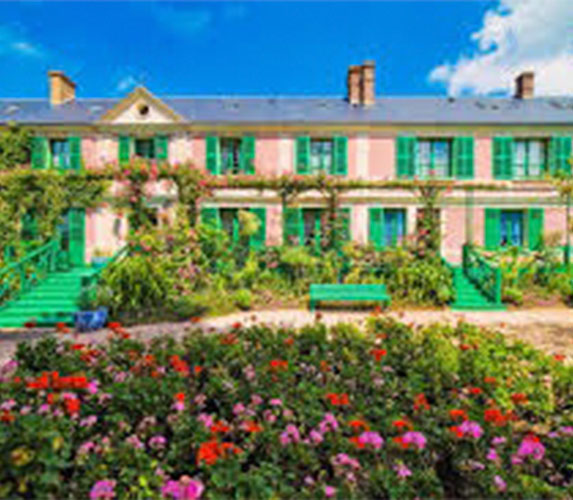
Claude Monet’s home and gardens at Giverny are inseparable from the story of Impressionism. While the house itself is charming, it is the gardens that truly captivate, instantly recognisable from his Water Lilies and other iconic works. Even for those less familiar with his art, the beauty of the setting in every season is undeniable.
Giverny lies around three hours from Glatigny Farmhouse, so we recommend combining it with other sights along the way to make the most of the journey.
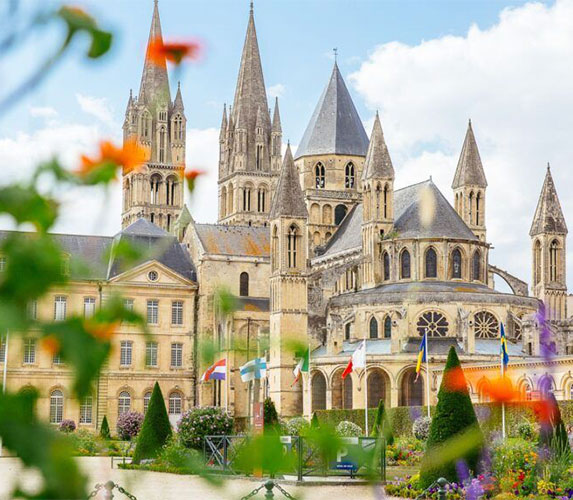
Caen, capital of the Calvados region and close to the farmhouse, has a long and important history. Although much of the city was destroyed during the Allied landings, several magnificent churches survived remarkably intact and remain central to its character.
The Caen Normandy Memorial Centre offers comprehensive insight into World War Two, the Battle of Normandy, and the D-Day landings. Given its proximity and the wealth of significant sites nearby, it is an excellent base for half-day or full-day guided tours of the landing beaches.
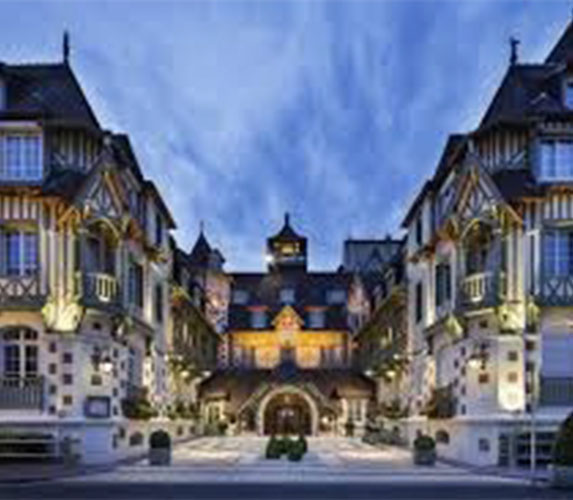
Deauville is one of Normandy’s most stylish seaside towns, known for its expansive sandy beach and elegant 1920s beach huts. From the promenade, you can wander towards fashion boutiques or along the Côte Fleurie, the Coast of Flowers, which stretches for miles in quiet beauty.
With numerous marinas, including the yacht club at Port of Morny, and a calendar of exclusive regattas, Deauville attracts visitors from around the world. Its upmarket restaurants and refined atmosphere give it a distinctly polished feel that many guests are drawn to.
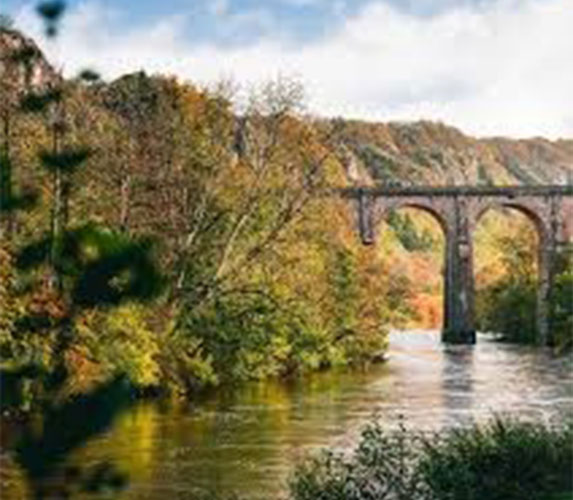
South of Caen towards Flers de l’Orne lies Suisse Normande, often called Norman Switzerland for its rolling hills, forests, and winding rivers. It is a haven for kayaking, climbing, hiking, and mountain biking, with panoramic views from the gorges of the Rouvre and the Rocher d’Oëtre.
The valleys of the Vère and Noireau, and the stretch of the Orne Valley between Pont d’Ouilly and Thury Harcourt, offer quieter pastoral beauty. Wildlife and unspoilt scenery are as much the attraction as the adventure itself.
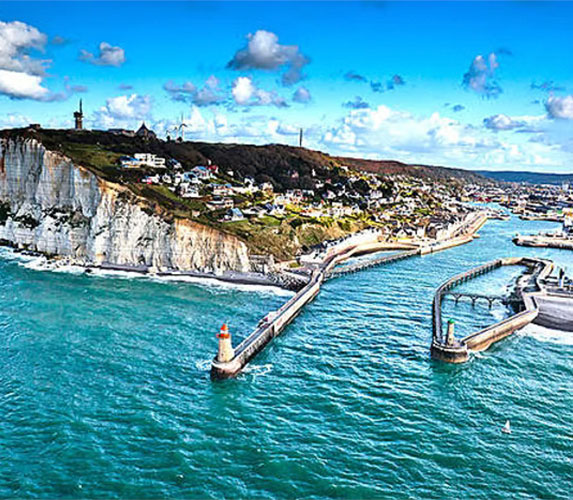
Fécamp, on the Côte d’Albâtre, was France’s first seaside resort when established in 1832, originally drawing a more cultured and affluent society. Much of that sophistication remains today, and the town continues to attract summer visitors.
The 12th century Church of Sainte Trinité, with its Renaissance altar and impressive interior, is a highlight, while nearby Valmont offers a medieval castle and the ruins of a 12th century abbey. Writer Guy de Maupassant once lived here and set many of his stories in the area.
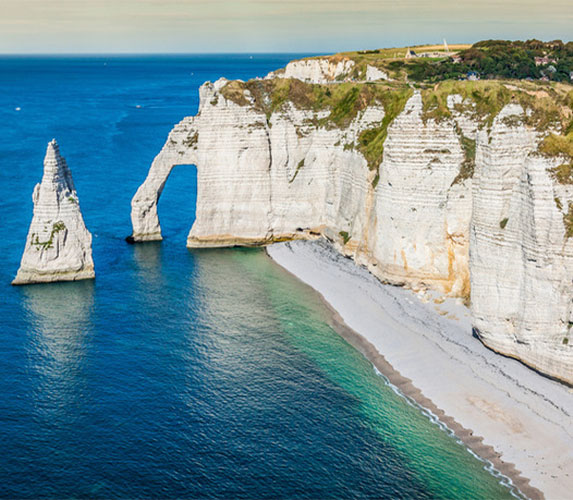
Étretat sits beneath dramatic chalk cliffs rising nearly 100 metres above the sea, offering extraordinary coastal views from above. Its beaches are popular, yet the town also remains closely tied to its fishing heritage, reflected in the seafood restaurants nearby.
The Belle Époque villas add architectural charm, and the landscape famously inspired Monet, who painted several of its seascapes.
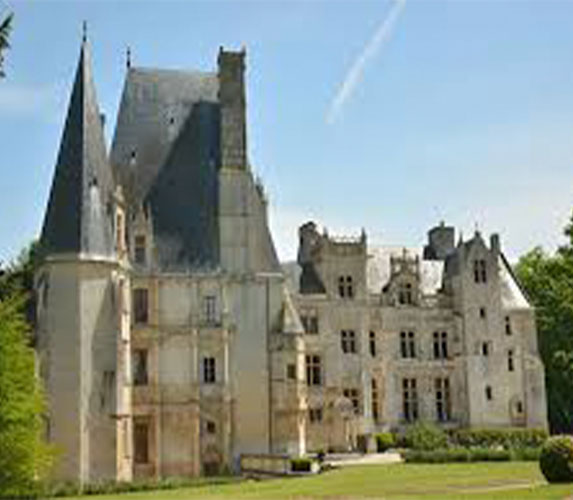
In the lush Mue Valley stands the 13th-century Château de Fontaine Henry, later enhanced during the Renaissance. Its ornate stone façade makes an immediate impression, while inside you will find beautifully furnished rooms with period pieces and paintings by artists including Rigaud, Mignard, and Robert.
The surrounding parkland and forests are ideal for a gentle walk, and the chapel within the grounds dates from the 13th century, later renovated in the 16th century.
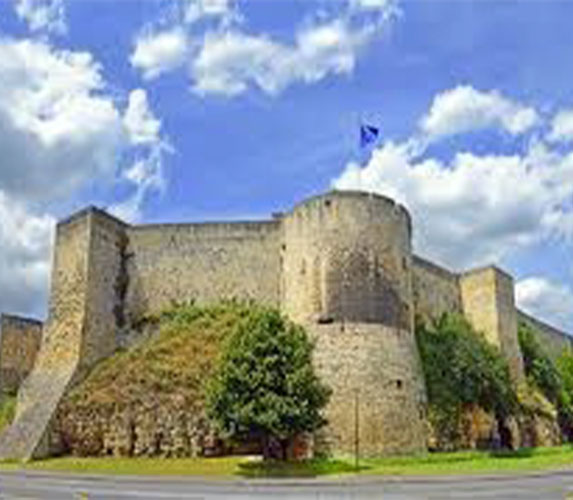
Built in 1060 by William the Conqueror, then King of England, Château de Caen is one of Europe’s largest medieval fortresses. Originally a royal stronghold and later an English base during the Hundred Years’ War, it continued in military use during the Second World War.
Today it houses the Musée de Normandie and the Musée des Beaux Arts. The latter holds one of France’s most significant fine art collections, with works by Rubens, Poussin, Monet, Boudin, Brueghel, Courbet, and Veronese, among many others.
Beyond the Tapestry, Bayeux is also home to the British War Cemetery and the Memorial Museum of the Battle of Normandy. Covering the period from 7 June to 22 August 1944, the museum includes the film Normandy 44, A Decisive Victory in the West, and honours both soldiers and civilians who lost their lives.
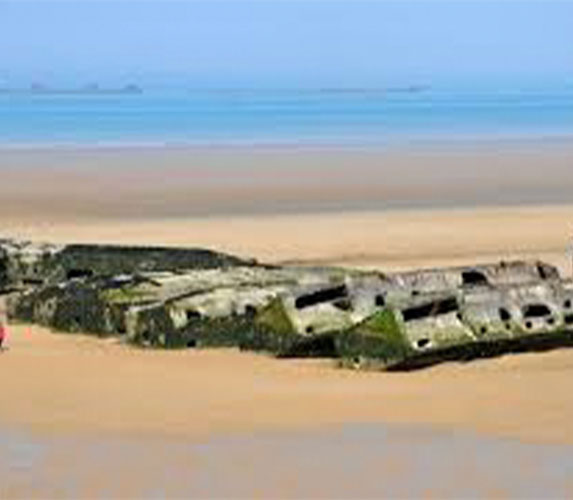
At Arromanches, not far from Omaha Beach, the D-Day Museum stands on the very site where the British 50th Northumberland Division constructed the Mulberry harbour after clearing German bunkers.
Guided tours and working models explain how this extraordinary engineering feat operated, and remnants of the harbour can still be seen offshore. Nearby cafés and shops provide a welcome pause after what is always a deeply meaningful visit.
Interested in booking a stay at Banlicken? Get in touch with us today by filling out the contact form below or contact us directly.